A commentary on the film “Stories From the Red Couch”
In case you haven’t seen it, here’s the trailer.
If you have the time, here’s a link to the forty-five minute video.
The trailer was released a month ago. The film was released just a week ago.
It’s promoted as simply a “Hollywood produced film about adoption,” and described as a project meant “to capture 99 years of [The Cradle’s] work through emotional, inspiring stories of adoption.”
It’s “Hollywood produced,” alright. It’s a polished, obviously professionally produced and edited documentary-style film. But to say it’s “about adoption” is terribly misleading. What it’s really about is fundraising. To facilitate adoption.
The Cradle is a private adoption agency that’s been around for nearly a hundred years. The film is presented and stylized as a celebration of The Cradle’s work by showcasing several “successful” adoption stories from the perspective of the heroic savior adoptive parents and the counselors employed by The Cradle. The fairy tale-like stories portray adoption as something “magical,” and The Cradle as someplace where “dreams come true.” Lofty words and phrases describing The Cradle and its work, such as “destiny,” “meant to be,” “special place,” and even “divine intervention,” are sprinkled throughout the forty-five minute campaign.

What’s missing? It’s obvious to adoptees. Whether we’re “well-adjusted” or struggling, in the fog or out, wrestling with identity issues, facing secondary rejection, muddling through a reunion, or fighting against the powers-that-be in a closed records nightmare, the emotional turmoil of the adoptee is sorely missing from The Cradle’s fables of the adoptive family. Even adoptees who claim a happy childhood and successful family life growing up adopted face issues related to adoption trauma. It’s a fact. The deep emotional experiences of great loss and grief are a common theme in the life of a adoptee. The trauma related to being separated from one’s mother and family at birth or soon thereafter is real. It may not be something an adoptee feels as a child growing up, but it often surfaces later in life, particularly during milestone events like marriage, childbirth, or death of an adoptive parent or someone close to the adoptee.
In the film, The Cradle claims to be a place that recognizes and nurtures a pregnant mother struggling with the decision of whether to keep her child. How does a mother even get to that point? How is the option of adoption introduced to a pregnant mother who is under duress? I turned to The Cradle’s website for answers.
The Cradle is proud of their on-site nursery. The website proclaims: “The Cradle is the only adoption agency in the country with an on-site nursery offering a safe, neutral place for infants to stay while their parents take the time they need to decide if adoption will be the plan for their child.” So, the mother and child are separated while the mother “decides” if adoption is right for their family situation? This is where the “options counseling” comes in. There is little positive or encouraging information on the website about the choice to parent. And there was even less mentioned in the film. What about options for parenting? What about support for the mother and child together rather than a nursery that separates mother and child? The website’s page for “options counseling” is sparse, and includes a simple comparison of “ADOPTION” and “PARENTING” that lists the things an expectant mother should consider (according to The Cradle) if she is thinking about parenting her child:

- Your daily schedule and child care needs
- Your budget, including housing, living expenses/bills, baby supplies, transportation, child care, etc.
- Health care and medical insurance
- Supportive people (family, friends, professionals) – identify who those people are for you, and talk with them about the kinds of help you can expect from them
That’s enough to scare the living motherhood out of me. Where are the answers? Where are the resources? And to make matters even more one-sided, the page on the website that features the nursery also features a big window with continuous scrolling photos of hopeful smiling potential adoptive parents with the caption, “Choose an Adoptive Family.” Problem solved.
The film does mention that a parent who has taken advantage of The Cradle’s services, like counseling and the nursery, can, of course, decide to keep her child and simply come and get the baby and take her home. Good to know. If The Cradle actually does this work (like counseling in favor of keeping your child and directing a mother and/or father to usable resources, etc.), why not highlight in the film a few of the stories where this sort of happy ending resulted? Or at least provide some statistics. I know I would have loved to have seen a few of these real-life fairy tales where mother decides to keep her child. I mean, really . . . this sounds like a much happier (and more natural) ending to any story than a child separated from his or her biology and family and thrown into the arms of strangers.
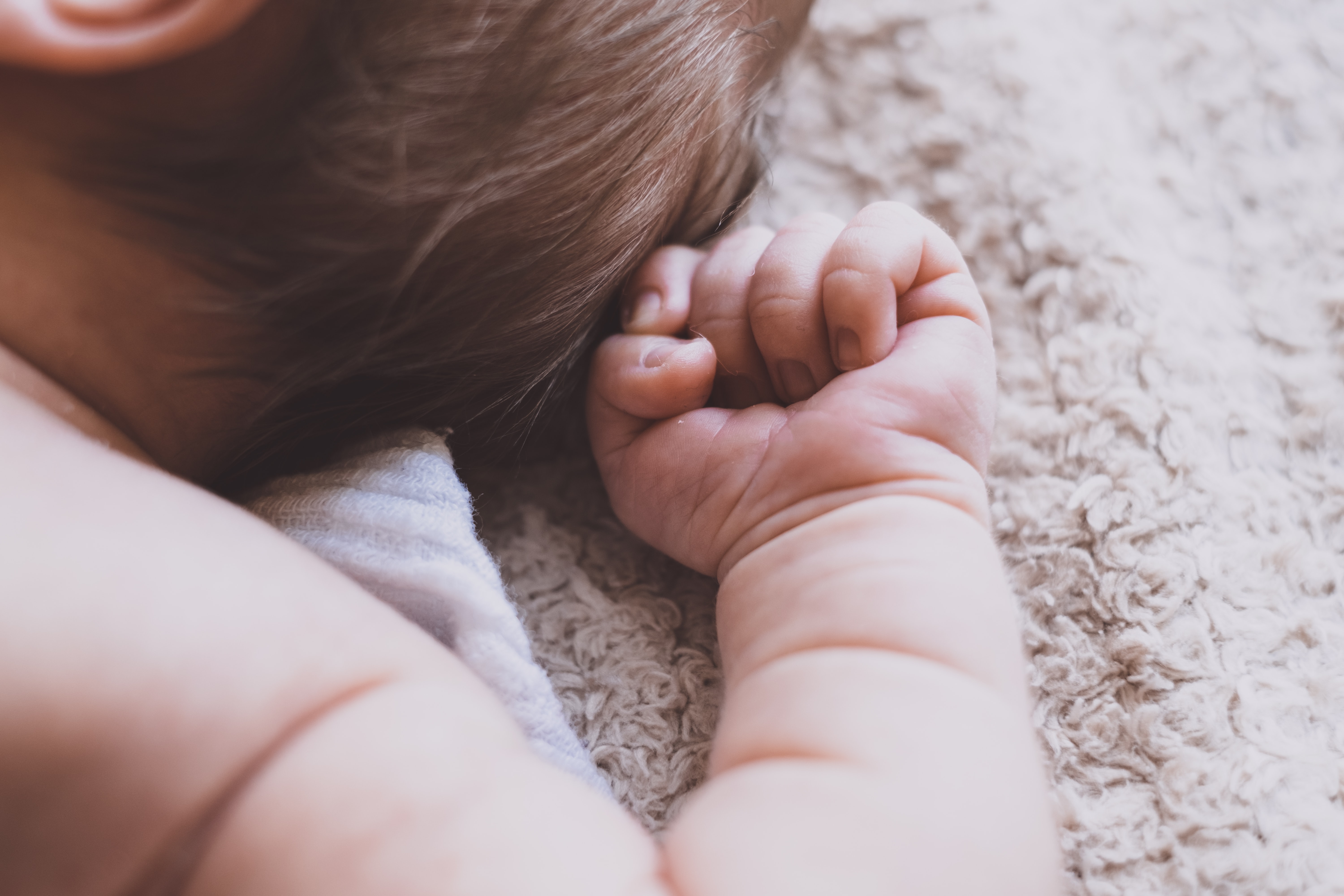
Note to adoptive parents: That baby isn’t bonding with you. It’s a matter of life or death for the baby–her needs must be met. It’s survival mode.
But there are no family preservation-style happy endings shown in the film. That’s because The Cradle is about adoption; more specifically, facilitating the brokering of babies. Period.
More to come on this topic–look for “Red Couch Rebuttal: Adoptees (and Others) Talk Back to The Cradle,” coming to NAAP Happy Hour soon.
 The tulips are blooming in Washington State right now. The Orcas are in Puget Sound, swimming and feeding around the beautiful islands across the Sound from Seattle. And Jonathan, my sweet, smart bio-dad, just celebrated his seventy-seventh birthday at his home in Bellingham.
 It was five years ago this weekend (Easter) that I flew up to Washington to meet Jonathan for the first time. Here is a
  that junk room downstairs. I haven’t yet . . . but I should. I know it will feel good when I do. Silver lining.
 I’m all for on-line social clubs, too. Indiana Adoptee Network has started an Adoptee Happy Hour for adoptees and those connected to adoption. The group “meets” online several times a month. You can check out
 We know that as an adult, Randall is an over-achiever and a perfectionist. And even in the flashbacks, we see Child and Teenage Randall aiming to be a over-the-top people-pleaser and solver of all of the Pearson Family problems. Randall’s anxiety has always been central to his character. But in these past episodes, we seem to see Randall sort of “flailing in the dark” about where the anxiety comes from and how to deal with it.
 So, FINALLY, Randall starts to realize, through his therapy, that his abandonment issues are at the heart of his anxiety. Interestingly enough, however, the episode is touted as a “What if Jack Never Died” story. But what really comes though, for me anyway, are the scenarios that Randall plays through his head regarding his bio dad. Randall realizes, through is therapy, the possibility of rejection, a different kind of reunion, questions about his bio-mother, different emotions about his adoptive parents. . . all so familiar to an adoptee. For me, this was missing in Randall’s story before last night. The flashbacks never showed him wondering about his biological family. His childhood, as far as we knew, was not riddled with fantasies about his bio parents and where they were and whether they were looking for him. Perhaps he didn’t think about it as a child or as a teenager. But he sure as hell let it all out during his therapy as an adult. All the scenarios were there.

 I’m open, and I hope I remain open, to new experiences, ideas, friendships and people. People change their minds about things, too. People evolve. The way I felt about something yesterday (or ten years ago) may not be the way I will feel about it tomorrow (or five years from now).
 For some, finding closure implies a complete acceptance of what has happened and an honoring of the transition away from what’s finished to something new. I guess in that sense, I agree with closure, in theory. I still like to think of my life as a journey—a windy road with all kinds of pitstops, detours, forks, and even potholes. Hang on, it’s a bumpy ride!
 I don’t usually make New Year’s Resolutions (okay, I make them, but I never keep them), but for 2020, I’ve decided to be more positive. I’ve made a pledge to myself to be a “glass half full” kind of gal. Don’t laugh.
 I have a friend who beat Non-Hodgkin Lymphoma in the last decade. He and his wife could not have gotten through it without positive thinking. It was a life-changing battle for both of them, their families, and friends. I’ve watched in awe as he and his wife faced challenge after challenge with poise and positivity. He had a bone-marrow transplant in 2011. It was successful, but brought with it a host of other complications. He has basically been fighting for his life for the entire last decade. 2019 ended with a double lung transplant, and this, too, has been a success! We had dinner with this couple recently, and I was nearly in tears just watching our friend as he was more animated, engaged, and happier than I’ve seen him in years. Garrett, my now 19-year-old, wants to get a tattoo of a pair of lungs to commemorate our friend’s success in this battle and as a tribute to him as a positive role model. He is an inspiration to us all. The power of positivity.
 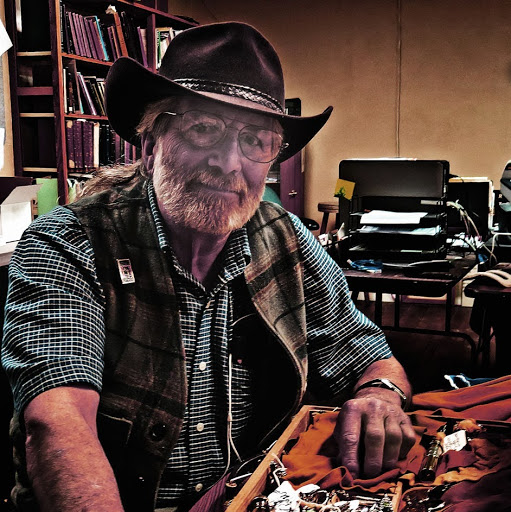 Another good thing that happened: thanks to DNA, I discovered my biological father! He’s alive and well and I’m so thankful that I’ve been able to meet him and have a relationship with this extraordinary, talented, and smart man. He didn’t even know that I existed. And I gained a sister and a niece and a whole new extended family. It’s been a weird and oddly satisfying journey. Our relationship has evolved in a way I could never have imagined. We have been working together for the last 5 years to seek out hidden truths about his life and (our) family.
 Adoption: My Truth