It’s been a while. Trust me, though, not a day goes by without me thinking about adoption. The healing continues. My strength grows, and sometimes wanes, but overall, it’s a journey that never ends.
I’ve taken a break from some adoptee-centric groups and forums, for my own mental peace. We have to find our own space in this complex adoption community. I have several great friends that I’ve met over the years–adoptees and first-mothers–who have nurtured me through the healing process, and I hope I have been there in a meaningful way for them, as well.
I’ve been wanting to write something for #NAAM (National Adoption Awareness Month), and I’ve decided to meld my thoughts about adoption/adoptee awareness with Thanksgiving. Being “grateful” is a touchy subject for most adoptees. But honestly, being thankful or grateful is nothing to be ashamed of. So, here goes.
1. Normalcy; a Fair Childhood.
My parents did their best in the 1960s to raise my adoptive brother (no relation) and me. They weren’t perfect. Neither were we. They believed in the “blank slate” theory they were fed when they adopted us. That’s not what they got. Oh, hell no. Surprise! It wasn’t bonding. It was survival mode. My dad worked; he was hardly around when we were children. My mom stayed at home, but she was distant. Oh, so distant. I know now that my experience with my mother wasn’t unique. But, I survived. My brother and I had a discussion about this recently. We have no complaints about our childhood. But when we look back, we look through a lens of knowledge. Knowledge about how adoption affected us. Knowledge about the trauma and the fear and our individual coping mechanisms. We did okay. Well-adjusted, as they say.
2. The 1970s.
Back in the 1970s, parents did not even think twice about things like UV rays, weird grown-ups/strangers lurking around every corner, the dark, etc. Parents allowed their kids to play outdoors, away from the front yard, as long as they wanted without even keeping an eye on them. My mom even sent me, on occasion, barefoot, on my bright pink banana-seat bike, to the local liquor store to pick up a carton of cigarettes for her. I would buy some Bottlecaps or Gobstoppers for myself with the change. And, remember this? “It’s 10 pm. Do you know where your kids are?” It was an actual commercial that played on the television networks at 10 o’clock every night, reminding our parents that they actually had responsibilities! My best friend’s mom used to have an alarm set between The Love Boat and Fantasy Island to remind her to go outside and yell for her kids to come home! We were allowed, and encouraged, to explore. It was an opportunity, however dangerous, to discover our identities. I had a great time in the 1970s with my friends.
3. Roe v. Wade
At age 17, I could have been destined to a fate similar to my birth mom’s. What could I do? I found myself pregnant at age 17. Thankfully, a good friend of mine had already gone through an unwanted pregnancy and an abortion, so I had someone to lean on for advice. Who knows what I would have done without knowing someone close to me who had gone through it previously? I never told my mother. I only told that one friend. My boyfriend, luckily, had a job at a local mini-mart, so we were able to pay for the procedure. We were just children. I am sad for younger self. I have no conscious memory of that day.
4. Traveling Abroad
I put myself through college. I went to the local state university in my hometown. I’m thankful to have had that opportunity so close to home. I worked 20-30 hours per week and carried a full course-load each semester. It wasn’t easy, but I was determined. I don’t know why I had such ambition-no one in my (adoptive) family had gone to college. I lived at home and worked and commuted to school. It was a grind. For my senior year, I was determined to go big. I applied for a study-abroad program to study politics in the United Kingdom. I was accepted! I spent nearly a year in Yorkshire, England, at the University of Bradford. It was magical in so many ways. Living away from home and in a foreign country allowed me to discover who I really was, away from the influence of my adoptive family and without the constraints of what people expected of me. I could be who I wanted. Who I really was. I could question things. It was truly a journey of self-discovery. The experience moved me to search for my biological family. To discover my true identity.
5. The Advancement of DNA
In 2015, I submitted my spit to the company 23andMe. Not so much to find relatives (I had already found my bio mom in the 1980s via prison records, and she refused to meet me or have any type of ongoing correspondence), but to find out about any health concerns. I thought it might be a good idea to find out if I should be concerned about anything healthwise as I approached middle-age. Thankfully, DNA testing revealed a clean bill of health. But that’s not all. It gave me my biological father. It also allowed me to connect with aunts, uncles, and other relatives on my bio mom’s side. So, even though she wasn’t willing to acknowledge me, other family members willingly spoke with me and gave me some answers to the questions about my bio mom and her family that had haunted my heart for years.
6. A Connection
My bio dad and I enjoyed a heartfelt reunion. I didn’t expect much, because he didn’t even know I existed (not to mention the experience with bio-mom), but I was able to convince him, with the help of DNA, that I was, indeed, his daughter. I helped him connect with his own father’s legacy (my grandfather!), and family members that he didn’t even know existed. It was satisfying and for a while, magical. I know he loves me. And I love him. But real connection and family are tricky things for adoptees. We share no history of conscious memory. And we live nearly 1300 miles apart.
The issues after reunion have to do with information learned on both sides that may be disconcerting to the other party….and this is the period where that information starts to sink in….and the emotions attached to that information start to come into play. My bio dad finding out about my mere existence was a shock to him. Any memory of my bio mom still evades him. And I know that bio mom’s secondary rejection of me haunts him. He has never reached out to her (I don’t blame him).
More importantly, the information and revelations I was able to provide to him about his beginnings and his own father and mother (my grandparents!) I’m sure affected him even more. He’s told me more than once that all of these discoveries in his seventies (about me, his parents) have transformed him as a person and although he has a better understanding of “why he is the way he is” (his words), he struggles with questions that will never be fully answered. So here is my father, nearly eighty years old, struggling with his identity, even though he has lived a full, successful and colorful life. I’m nearly sixty and I absolutely know how he feels. There is still an unbreakable connection between us, even though we don’t see each other or talk often. Our souls are forever connected by the threads of adoption, family lies, and ties.


 As for me, I’ve been busy meeting more family members–wonderful aunts on my maternal side, and more cousins on my paternal side–who have all been so wonderful in opening their hearts and sharing stories. There is so much rich history that I am still learning. And I am thankful. It’s been a journey with surprises that I never expected. I’m loving it.
 I’m still editing and rewriting. It’s a big job. It will never be perfect, or just right. I am thankful for my editor, who has been guiding me and punishing me (just kidding), so that I know where to go with my story. Thank you for hanging in there with me.
 I apologize in advance. This is a long post. Since it’s been awhile since I’ve updated my blog and my journey in earnest, I wanted to summarize my story and let readers know where I am on this crazy journey. I also wanted to answer a question that I’m asked often: “What did you say to your biological father when you introduced yourself?” Every journey is different and complicated in its own way (although I’m not sure any journey is more complicated than mine!), but I want to encourage everyone who is curious or is being held back by his or her own fears to move forward. And remember, happy endings are not the goal–the goal is wholeness.
  I was twenty years old when curiosity got the best of me. Of course, adoptees understand that it is much more complicated than just simple curiosity. It’s a need to understand and know one’s true identity. Identity that includes a sense of belonging and a knowledge and familiarity with family history, heritage and ethnicity. A yearning to find someone who looks who looks like me.
 Luckily for me (and other adoptees from the closed records era), the evolution of science and technology over the years helped keep the dream of finding answers alive. For adoptees, a DNA test can provide the first ever connection with a biological relative. You may only get distant relative matches at first, but by contacting those relatives and exploring family connections and sharing stories, many adoptees are able to identify close family members and even birth parents. And today’s internet-strong social media makes it easier than ever to connect and make contact. It’s tricky and can even feel like trying to find a needle in a haystack at times, but DNA testing can reveal so much. Even when it feels like you’re fighting against all odds.
 Unfortunately, a large percentage of the distant relative matches will not respond to requests for contact. But because the databases are so large and growing daily, you are still likely to make many important contacts. And here’s the key: you have to be consistent. You have to be willing to tell your story over and over again. You have to talk about your adoption and provide every bit of information you know. Names, places, even stories that may or may not be true. Share and share again. Someone out there knows your truth. Or, someone out there knows just enough of your truth so that you can put the puzzle pieces together. And you never know—you may beat the odds—like I did.

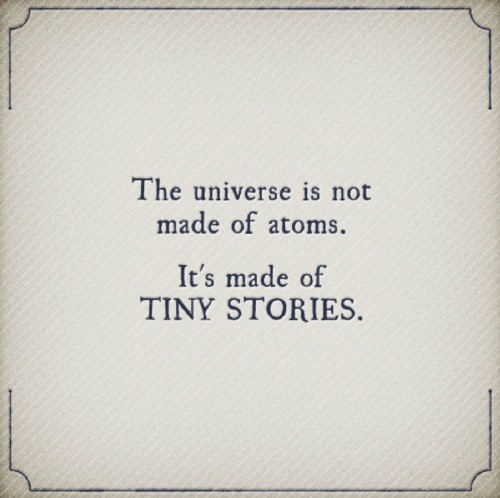 Stories are powerful, too. Stories communicate, connect and strengthen. Even in everyday conversation, when people tell others about themselves, they to do it in a narrative way—that’s just how humans communicate. People story their worlds. And it’s not just about the adoptees. The subject of adoption and the real stories behind who adopts are inherently connected to people dealing with complex and sensitive personal issues like infertility, surrogacy, illegitimacy, mixed race families, and families with same-sex parents. Adoption, like the family issues mentioned above, contributes to a distinctive and often challenging form of family. These stories are for everyone.


 Adoption: My Truth